
The Hidden Meaning Behind the Statue of Liberty
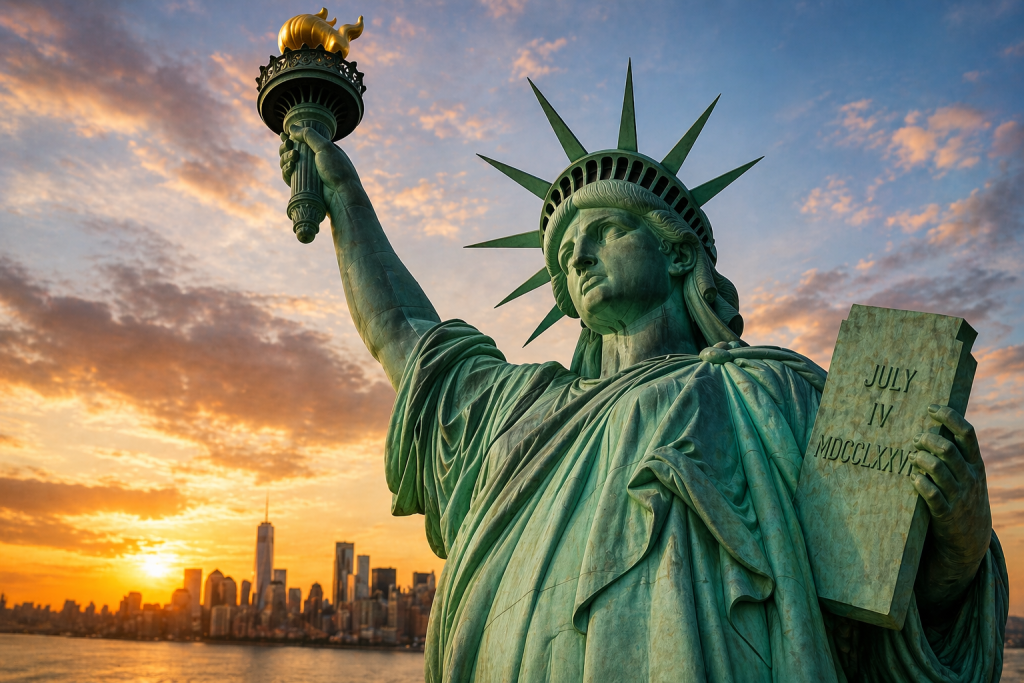
The Statue of Liberty is one of the most recognizable landmarks in the world. Standing tall in New York Harbor, it has become a global symbol of freedom, hope, and democracy. Most people can instantly picture its flowing robe, crown, raised torch, and tablet inscribed with July 4, 1776—the date marking American independence.
For generations, the Statue of Liberty has been viewed as a welcoming symbol for immigrants arriving in the United States. However, the true history behind the monument tells a deeper and more complex story. While many associate the statue with opportunity and new beginnings, its original purpose was tied to a much more significant historical event: the abolition of slavery.
The Common Interpretation of the Statue of Liberty
Today, the Statue of Liberty is often connected to immigration. This understanding largely comes from the famous poem The New Colossus by Emma Lazarus, which includes the well-known line inviting the “tired, poor, and huddled masses” seeking freedom and a better life.
Because of this poem, the monument became associated with hope for immigrants entering America through Ellis Island.
However, there is an important historical detail many people overlook.
The Emma Lazarus inscription was not added until 1903—nearly two decades after the statue was officially unveiled. This means immigration was not the original reason behind the monument’s creation.

Why the Statue of Liberty Was Really Built
The Statue of Liberty was originally intended to represent emancipation and the end of slavery in the United States.
The monument was gifted by France to honor freedom after the American Civil War and the abolition of slavery. French political thinker and abolitionist Édouard de Laboulaye proposed the idea as a way to celebrate liberty, democracy, and the liberation of enslaved people.
Sculptor Frédéric Auguste Bartholdi was chosen to design the statue.
Early versions of the design included Lady Liberty holding broken chains in her hand, directly symbolizing freedom from oppression and slavery.
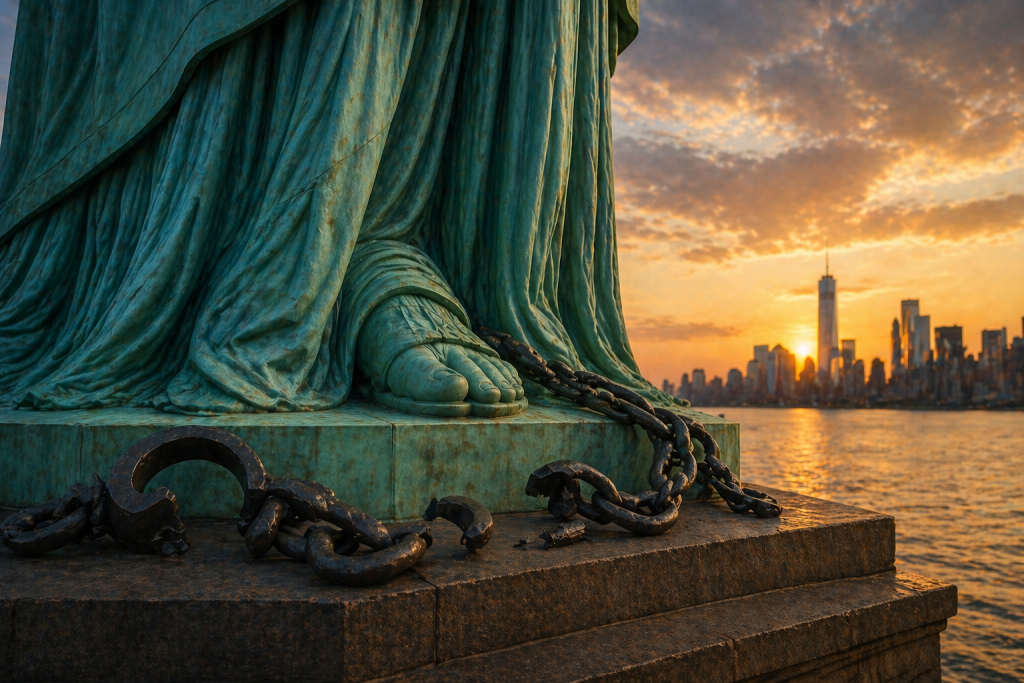
However, the final version changed this concept.Instead of prominently displaying the broken chains, they were moved to the statue’s feet, making them difficult to notice. The tablet replaced the chains in Liberty’s hand, shifting the monument’s visual message.
The Hidden Chains Beneath Lady Liberty
Many visitors are unaware that chains still exist as part of the Statue of Liberty’s design.
At the base of the statue, broken shackles and chains remain as subtle symbols of liberation. These details were intentionally included to represent freedom from oppression.
Yet because they are less visible, many people never realize the monument carries a direct reference to slavery and emancipation.
This design change altered public perception over time.Rather than focusing on the abolition of slavery, the Statue of Liberty gradually became associated with immigration, national pride, and the American dream.
How the Meaning of the Statue of Liberty Changed Over Time
The meaning of historical monuments often changes as society evolves.
The Statue of Liberty is a powerful example of this transformation.
As millions of immigrants entered the United States during the late 19th and early 20th centuries, the statue became a symbol of arrival and hope.
For many families, seeing Lady Liberty in New York Harbor represented a fresh start.
This shift in interpretation helped redefine the statue’s public identity.
Over time, the monument became less connected to slavery abolition and more tied to immigration, opportunity, and national identity.
America’s Contradictions: Freedom and Inequality
The story of the Statue of Liberty also reflects broader contradictions within American history.
The United States was founded on ideals of liberty, equality, and justice. Yet many of the same leaders who declared that all men are created equal owned enslaved people.
Religious freedom was celebrated while Indigenous communities often faced displacement and forced cultural change.
These contradictions reveal how freedom in America has always been a complex and evolving idea.
Even after slavery ended, social, political, and economic inequality continued for generations.
Racial discrimination remained deeply embedded in institutions and systems.
For decades, these realities were often treated as secondary parts of history rather than central elements.
Today, there is a growing effort to examine these truths more openly.
The Statue of Liberty as a Reflection of American Identity
The evolution of the Statue of Liberty mirrors how America presents itself to the world.
Originally connected to emancipation and liberation, the monument later became associated with immigration and opportunity.
This shift demonstrates how nations shape their narratives by emphasizing certain stories while minimizing others.
The Statue of Liberty remains powerful because it represents ideals that people continue striving toward.
Freedom, equality, and justice are not simply historical concepts—they require action and commitment.
The Real Meaning of the Statue of Liberty Today
The Statue of Liberty means different things to different people.
For some, it symbolizes a welcoming nation and the pursuit of opportunity.
For others, it stands as a reminder of America’s struggle to live up to its promises of freedom and equality.
Its hidden chains remind us that liberty is not just about symbols—it is about confronting history honestly.
The monument continues to inspire because it represents both hope and responsibility.
Final Thoughts
The Statue of Liberty is more than a famous monument or tourist attraction. It is a layered symbol with a complex history.
While many view it as a beacon for immigrants, its original purpose was to celebrate emancipation and the end of slavery.
Understanding this deeper meaning provides a richer perspective on American history and identity.
The statue’s evolving symbolism reminds us that freedom is not static. It must be continuously defended, expanded, and made meaningful for everyone.
In the end, the Statue of Liberty is not just about what America claims to represent—it is about the ongoing effort to truly achieve liberty and justice for all.